Squash racket vs tennis racket: what actually differs
A squash racket vs tennis racket comparison comes down to three numbers. Squash frames cap at 686 mm long and 500 sq cm of strung head, weigh 110–145 g unstrung, and get strung at 22–28 lb. Tennis rackets are heavier, wider, and strung roughly twice as tight.
Squash racket vs tennis racket: the specs side by side
The World Squash Federation writes hard maximums into its racket specifications, and most frames sit right at them.
| Spec | Squash | Tennis | Racquetball |
|---|---|---|---|
| Max legal length | 686 mm (27 in) | 736 mm (29 in) | 559 mm (22 in) |
| Typical strung head area | 460–500 sq cm | 613–742 sq cm (95–115 sq in) | roughly 645–690 sq cm |
| Weight | 110–145 g unstrung (255 g legal max) | 280–320 g strung | 150–190 g strung |
| String tension | 22–28 lb | 48–60 lb | 28–38 lb |
| Ball | ~40 mm, ~24 g, low bounce | ~67 mm, ~58 g, pressurized | ~57 mm, high bounce |
| Wrist tether | not used | not used | required by rule |
Length and squash racket head size are where the rules bite
A standard adult tennis racket is 27 inches, which is 685.8 mm — the same length as a squash frame at its legal maximum. Length is not what separates them.
Head area is. Squash caps the strung surface at 500 sq cm, and the frame can't be much wider than about 215 mm across. A 100 sq in tennis head is roughly 645 sq cm, close to 30 percent over that limit. Squash heads live in a narrow band as a result: open-throat teardrop frames push right up against 500 sq cm, classic bridged heads sit nearer 460–480.
Weight and squash racket balance
Squash frames are sold by unstrung weight — 110, 120, 125, 130 or 140 g. Add strings, grip and bumper tape and you're holding 150–170 g. A strung tennis racket at 300 g is close to double that, and the legal ceiling for a squash racket is 255 g, so most tennis frames break the weight rule before you measure the head.
Squash racket balance is quoted in millimeters from the butt cap, and most frames land between roughly 340 and 390 mm. Lower numbers are head-light: quicker to reverse on a volley, easier to dig out of a back corner. Higher numbers put mass behind your drives at the cost of hand speed in front.
String tension: a slack bed for a dead ball
This is the difference players notice first. A squash ball is hollow rubber, about 40 mm across and 24 g, and it barely rebounds until it's warm. A bed at 22–28 lb lets it sink in and spring back out. Hit it with a tennis frame at 55 lb and it deflects off with almost nothing on it.
Gauges differ too: squash strings are thin multifilaments, 17 or 18 gauge, where the 16-gauge polyester common in tennis would feel like a board.
Why a tennis racket feels unplayable on a squash court
The court is 9.75 m long by 6.4 m wide with four playing walls and a tin 48 cm high across the front, the same at every level of play. Every stroke has to fit that box: racket back with a wall a meter behind you, face under a ball dying in the nick, direction reversed on a volley in a fraction of a second.
A 300 g frame with a strung area a third over squash's limit fails all three. It catches the walls on the backswing, can't be turned around fast enough in a quick exchange, and gives you nothing against a cold ball. The squash vs tennis racket gap is a rules gap first and a physics gap second. The differences between the two sports go well past the equipment.
Squash racket vs racquetball racket
A racquetball racquet is a different shape of problem. It's capped at 22 inches (559 mm) including the handle, and the rules require a wrist tether, since the racquet is short and swung hard with an opponent standing close.
Being short doesn't make it legal for squash. Racquetball heads run around 645–690 sq cm, past the 500 sq cm squash limit just as tennis heads are, and they're wider than squash allows. The two sports use different balls, courts and scoring, and the gear crosses over in neither direction.
Worth separating: British racketball is not American racquetball. It's played on a squash court with a standard squash racket and a larger, bouncier ball.
A short squash racket size guide
Since length and head area are both capped, a squash racket size guide comes down to three choices.
- Head shape. Teardrop frames run the strings to the top of the head for the biggest legal stringbed and a larger sweet spot. Bridged classic heads are smaller and more precise.
- Weight. 130–145 g is stable, forgiving and kinder to the elbow — the sensible starting point. 110–125 g rewards clean technique and punishes late preparation.
- Grip. Squash frames come in one grip size. Players build the handle up with overgrips instead of picking a numbered size.
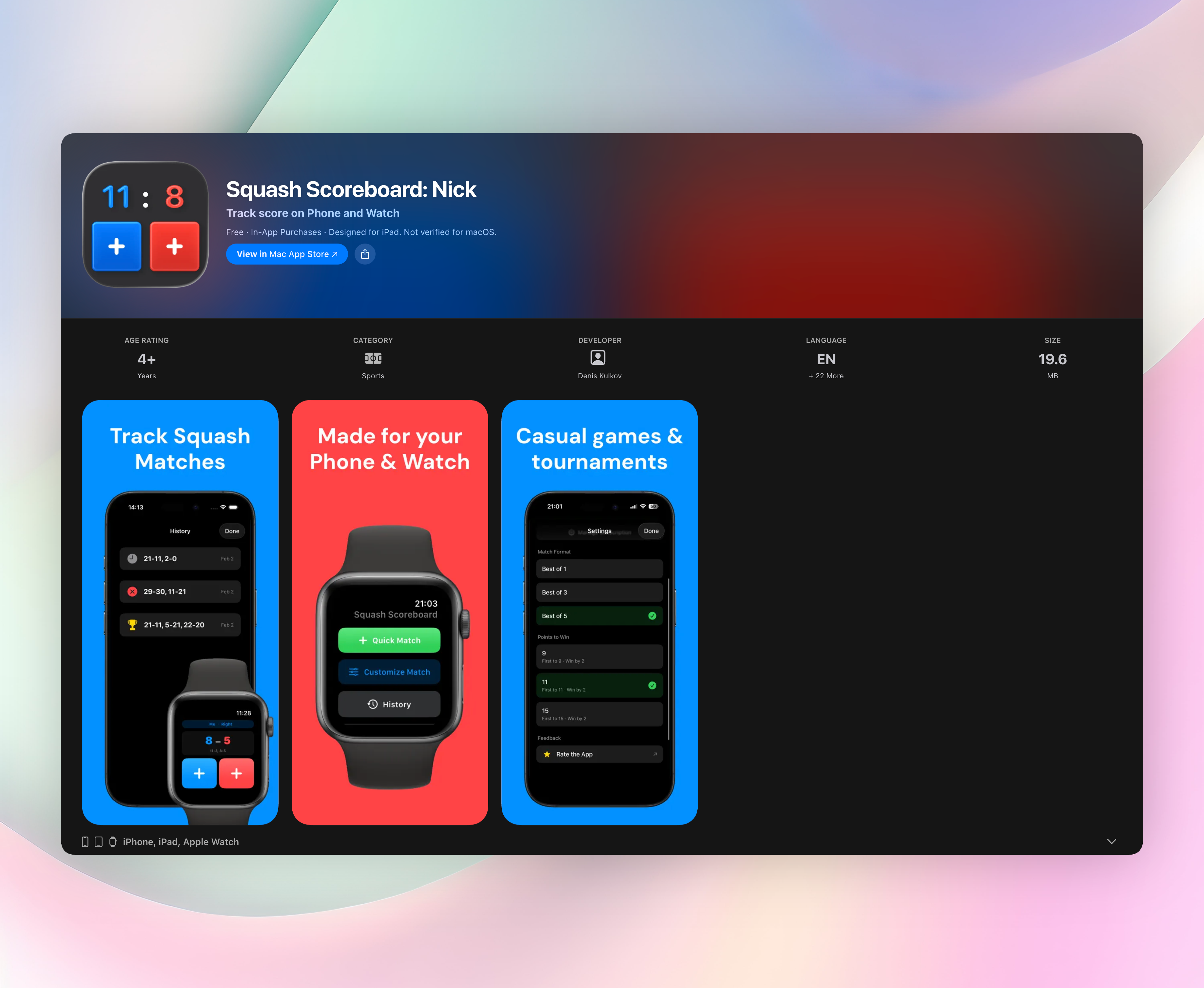
Strings and a spare grip matter more than people expect, and the rest of the squash equipment list is short. Whichever frame ends up in the bag, the scoring is the same: PAR to 11, win by two. Squash Scoreboard is a squash scoreboard app for iPhone and Apple Watch that tracks match scores, handy when you're testing a new frame and want the result to be about the racket.
FAQ
Can I use a tennis racket for squash?
No. A tennis racket's strung head is well over the 500 sq cm the squash rules allow, and a strung tennis frame exceeds the 255 g weight limit. It's also too wide to swing near the walls and strung far too tight for a squash ball.
Is a squash racket lighter than a tennis racket?
Yes, by a wide margin. Squash frames are 110–145 g unstrung and around 150–170 g ready to play, against 280–320 g for a strung tennis racket.
What squash racket head size should I get?
Most players do well with a teardrop head near the 500 sq cm maximum, which gives the largest sweet spot the rules permit. A bridged head around 460–480 sq cm trades some of that for control.
Can you use a squash racket for racquetball?
Not in sanctioned play. Racquetball limits racquets to 22 inches and requires a wrist tether, and a 686 mm squash frame is far longer than that. The reverse fails too — a racquetball racquet's head is too big for squash.
What tension should I string a squash racket at?
Most players sit between 22 and 28 lb. Lower tension gives more power and a softer feel; higher tension gives more control. Squash strings are thin and break often, so expect to restring more than a tennis player would.
Free Squash tools
- Squash Court Measurement CalculatorEnter a squash court plan's dimensions to create a clear checklist in metres, feet or inches for singles or doubles.
- Squash Racquet SelectorAnswer four fitting questions to get a squash racquet specification to shop with, plus reasoning and an alternative to try.
- Squash String Tension GuideChoose your playing standard, priority and string type, then compare your current tension with a practical squash recommendation in lb and kg.